The Ripple Effect
I recently spoke with an old college friend and learned that my passion for a project changed the way my professor taught history.
I had no idea – until now.
Here’s how it happened: I took a course that focused on the Transcendentalist movement in New England. It included the life and writings of Ralph Waldo Emerson and Henry David Thoreau, for example.
During the readings, I got curious about what life was like for the women of that era. What about Mrs. Ralph Waldo Emerson, whoever she was? And her mother? And her children? And Mrs. Henry David Thoreau (if there was one)?
For our final project, I found someone who had the same curiosity as I did, and the two of us set off to find some answers.
The problem was this: we couldn’t any history books that had written about them. Which made us even more curious, being female students inspired by the women’s movement of the 1960s and 70s. We were newcomers to what had been, up until our time, a male-only college, and we wanted women’s stories!
We decided to go find out for ourselves, so we drove out to Concord, Massachusetts and figured out where to find some historical records. During the Transcendental period, women were able to exercise their energy and authority through the church, so we combed through old church records.
It was fascinating (to us). We plotted out who belonged to which church. We learned what activities they created for their communities. We discovered that the community was not all united in one church but rather two “vying” factions and churches.
Using these records, we created storylines, following conversations and events. We learned what causes these women were talking about and raising money for, and saw where and how these privileged women exerted their energies. We were totally engaged in this project and had a great time piecing together our “history” for them.
After we handed in our paper, the professor called us into his office. We were scared, not knowing why. He sat behind his desk and asked, “What prompted you to do this? Undergraduates are expected to read what historians write about the era. Secondary histories, by historians who work with primary sources. Why didn’t you do that? Why did you go to the primary sources yourselves?”
We explained that we’d tried, but that nothing existed for these women. No one had written their stories, so we had to do it ourselves, to answer our questions.
It turned out that he was elated about our work. He loved that we had taken the initiative.
In fact, going forward, the Junior Seminar for all American History students required every student to use primary sources – even going so far as to show them how to do it.
As a result of that change in curriculum, my old college friend told me that he had his “aha” moment as an undergraduate. Working on his Junior Seminar project, using primary resources, changed how he thought about “facts.” He became an attorney and carried this throughout his legal career.
At all times, he says, he went to the primary source for information. Always. He bypassed the dominant story that was being told, written by others, and did the research himself, to understand the real issue, and all its nuances.
That one history course changed how he lived his life, and his professional practice. And now decades after college, I find out that I’d changed how history was taught. And the profound effect it had over someone I knew.
Now.
Think about your own life.
I have no doubt that you have had an effect on someone, or an institution, or an outcome – that you cannot even conceive.
Which is to say, what we do makes a difference.
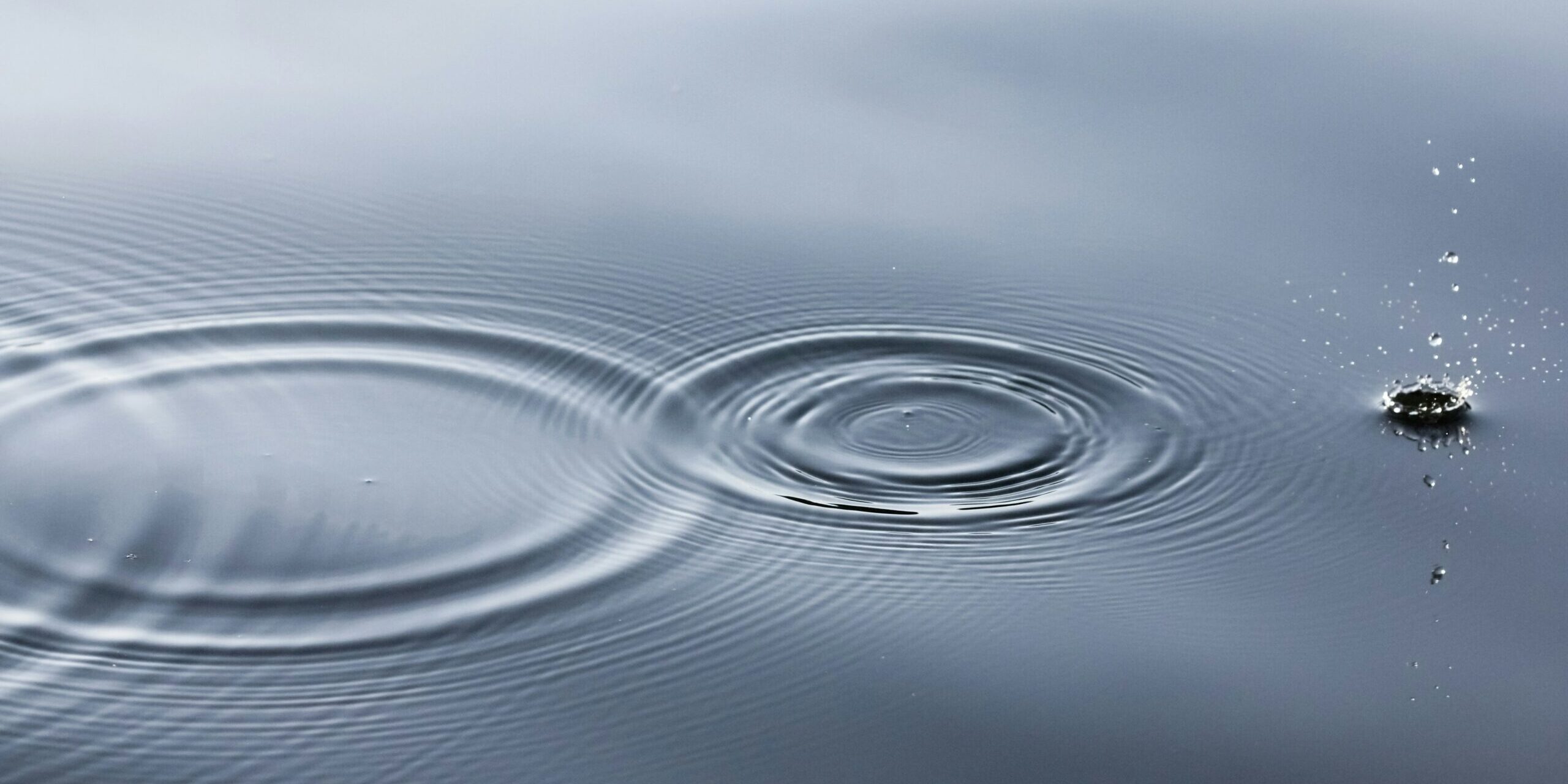
We create ripple effects that we may never even know.
I hope this inspires you to continue to be passionate about something – anything! And to be active in this life of yours.
Everything we do matters; we all make ripples.