Good News for Animals (Fall 2026)
Today I noticed a lone cow, lying down in a field across from our house.
It was unusual because it’s a clear, sunny day. No rain in sight.
I wondered if she was ok and kept checking on her. I even mentioned it to my husband. At lunchtime, we watched as she finally rose to her feet. It was then that my husband noticed another set of legs – the tiny legs of a small calf, standing behind her.
She had just given birth.
Wildlife Corridors Work
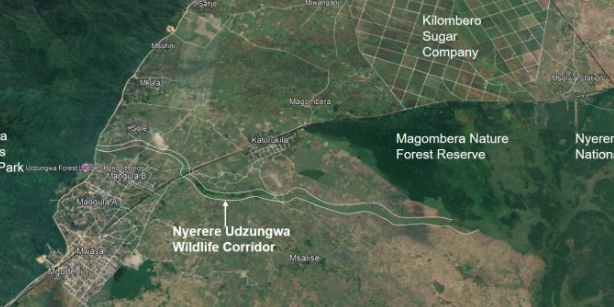
In Africa, data shows that even narrow wildlife corridors work: in “a skinny wildlife corridor just 200 meters wide and 14 kilometers long, threading through a densely farmed valley in Tanzania…. Camera traps recorded 529 elephants using the corridor over 15 months, along with buffalo, bushbuck, serval, monkeys, duiker, honey badgers and even otters.”
As exciting as this is, making a difference this big takes time, patience, and persistence. “Research into Tanzania’s elephant corridors began in 2006. Discussions with communities and government began years later. The corridor took seven years of preparation before Tanzania formally protected it in 2025.”
And it involves the local community. “The route wasn’t simply drawn onto somebody else’s land by conservationists. Local communities helped choose it. 368 landowners were compensated for giving up portions of their farms. Villagers help manage it. And when it came time to restore the land, local people pushed for native trees to feed the wildlife. More than 100,000 native trees from 30 species have already been planted, with different species deliberately selected to provide food and habitat for elephants, monkeys, birds and other wildlife.”
If a wildlife corridor can make this big a difference in one place, think of the possibilities around the world! All animals need enlarged areas to forage, to travel as seasons change, and to take care of themselves – even find medicinal plants (see story below!).
Beavers help recreate water habitats
“Beavers in the US turned a dying desert river into a river people kayak, fish and swim in again. And it took just six years!”
“In 2019, Emma Doden, then a master’s student at Utah State University, began moving beavers no one else wanted. Animals trapped as nuisances, displaced from infrastructure, or otherwise scheduled for removal were quarantined and released into the Price River, a struggling tributary of the Colorado in eastern Utah.
“Not all of them stayed. Some were taken by predators, some simply walked off to find better ground. Enough remained to build dams. Water levels are now the highest they have been in years, fish populations have recovered, and the town of Helper, which the river runs through, has a recreation economy on water that was close to disappearing.
“The beavers did not do this alone. Debris removal, dismantling of old and failing dams, and tighter rules on grazing in the riparian zone all came first. What the beavers added was maintenance no public budget can sustain: continuous, adaptive, unpaid engineering that slows water down and holds it in the landscape.” Link to story here.
Elephants self-medicate with plants
Did you know that African elephants self-medicate with plants? An article was published on nature.com’s Scientific Reports showing the data, as reported, in the Mount Elgon region of Kenya.
This information underscores the importance of wide ranges of topography for wildlife, so that elephants can move 20 – 50 km if necessary to obtain the plants they need for their health and survival. Remember the story about wildlife corridors above? It all ties in.
There’s good news around the world, for domestic animals and wildlife, as well as their habitats. Let’s use this progress to energize our efforts moving forward, caring about the world around us, as it supports all life on the planet.
To hear more good news, from those who are making a difference, visit the Wildlife Wins podcast.